Sewer line repair in Muncie when sewage backs up
Sewer line repair in Muncie starts with the main line, the pipe that carries everything from the house to the city sewer. When it blocks, dirty water comes up at the lowest drain, usually the basement floor drain or a downstairs tub. Stop using water in the house and call Plumber Muncie. A licensed local technician can come out to clear the line and find out what blocked it.
- Licensed local technicians
- No obligation
- All of Muncie
What sewer line repair covers
The main sewer line collects every drain in the house and runs under the yard to the city connection. A blockage or break anywhere along it affects the whole house, not just one fixture.
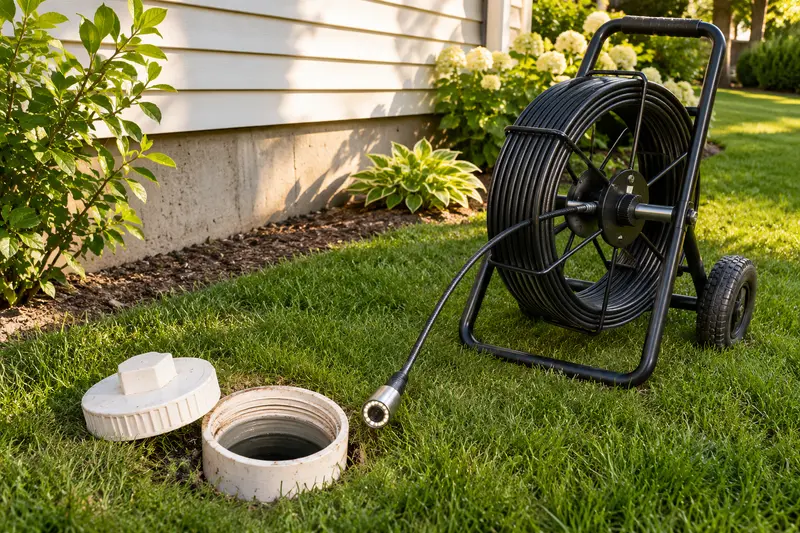
The work covers clearing clogs in the main line, finding out why it backed up, and repairing pipe that has cracked, sagged or been invaded by roots. Most houses have a cleanout, a capped pipe in the basement or the yard, that gives access to the line without digging.
- Clearing main line clogs through the cleanout
- Cutting tree roots out of the sewer line
- Camera inspection to see breaks, sags and offset joints
- Repairing or replacing damaged sections of sewer pipe
- Fixing sewage backups through floor drains, tubs and toilets
Signs of a sewer line problem
These point to the main line rather than a single drain.
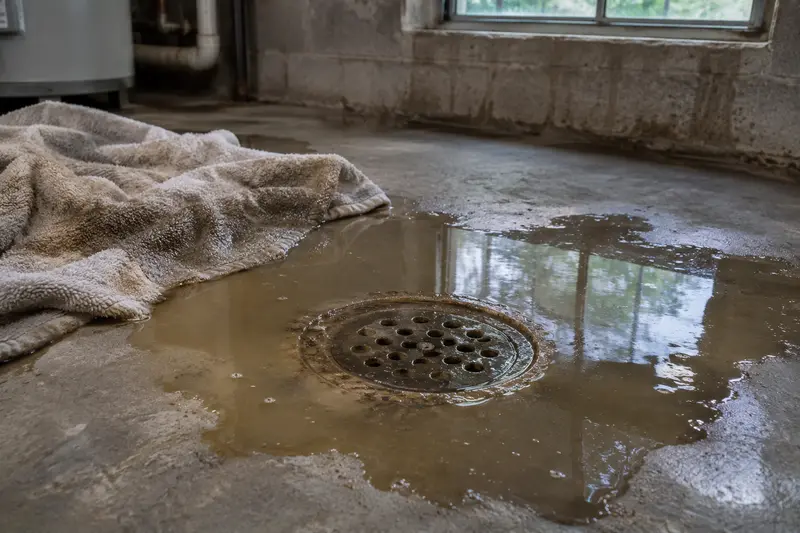
Water at the floor drain
Dirty water comes up through the basement floor drain, especially when laundry runs.
Every drain is slow
Sinks, tubs and toilets all drain slowly at the same time.
Toilet gurgles
The toilet gurgles or bubbles when the washer drains or the tub empties.
Sewer smell
A sewage smell in the basement or around the cleanout in the yard.
Soggy patch in the yard
A wet, sunken or unusually green strip of lawn along the sewer line.
Backups after rain
Drains back up after heavy rain or snowmelt.
What causes sewer backups
Tree roots. Roots are drawn to the water in sewer pipes and slip into joints and small cracks. Once inside they grow into a mat that catches everything flowing past.
Grease and wipes. Grease from the kitchen and wipes from the bathroom build up in the main line the same way they do in a sink drain, only further away.
Old pipe. Clay and cast iron sewer lines in older homes crack, shift and corrode, which leaves edges for debris to catch on and gaps for roots to enter.
Sags and settling. When the ground under a line settles, a low spot forms where waste collects and slowly blocks the pipe.
Heavy rain and snowmelt. A lot of water arriving at once can overload a line that is already partly blocked.
Sewer line repair in Muncie for older and newer homes
The kind of sewer pipe under your yard depends on when the house was built, and it changes what sewer line repair in Muncie usually involves.
Clay pipe. Many older homes still have clay sewer lines made of short sections joined together. Each joint is a place for roots to enter, and the pipe can crack as the ground moves.
Cast iron. Cast iron lasts a long time but rusts from the inside. The rough, scaly surface catches grease and paper, and eventually the pipe can crack or collapse.
PVC. Newer homes and repaired lines use plastic pipe with glued joints. It resists roots and rust, but it can still clog, sag or be damaged by digging.
A camera inspection tells you which you have and what shape it is in. If you have just bought an older house, having the sewer line looked at before the first backup is a sensible step. Sewer line repair in Muncie is far easier to plan when you know what is down there.
How urgent is a sewer backup
Sewer line problems
| What you notice | How urgent | What to do first |
|---|---|---|
| Sewage coming up through a drain | Call right away | Stop using every sink, toilet and appliance |
| All drains slow and gurgling | Call today | Hold off on laundry and long showers |
| Sewer smell in the basement | Call soon | Pour water into floor drains and check the cleanout cap |
| Soggy strip of lawn over the line | Call soon | Keep people and pets off the wet area |
| One fixture slow, others fine | Usually not the main line | See the drain cleaning page |
What a sewer line visit includes
The technician opens the cleanout and runs a cable or jetter through the main line to clear the blockage and get the house draining again.
Because a backup usually has a cause, the next step is often a camera inspection. The camera travels down the line and shows roots, cracks, sags or a collapsed section, and where along the yard the problem is.
The technician explains what the camera shows and the repair options, from clearing roots on a schedule to replacing a damaged section, before any further work starts.
Keep clear of sewage
Sewage carries bacteria. Keep children and pets out of the area, wear gloves if you have to move things and wash anything it touched.
Questions to ask about a sewer line repair
- What caused the backup, roots, grease or a damaged pipe?
- Can you show me the camera footage of the line?
- Where along the yard is the problem?
- Will clearing the line be enough, or does a section need repair?
- How can I tell early if it starts to block again?
For the first few minutes of any plumbing problem, keep the what to do now guide open on your phone.
How to protect your sewer line
Keep grease and wipes out. They are the most common cause of a blocked main line.
Know where the cleanout is. In Muncie homes it is usually a capped pipe in the basement near the foundation wall or a short white pipe in the yard. Keep it uncovered and easy to reach.
Watch the trees. Large trees over the sewer line are a root risk. If a line has had roots before, regular clearing keeps them in check.
Listen to the early signs. Gurgling toilets and slow drains everywhere are worth a call before they turn into a backup.
Fill floor drain traps. Pour water into seldom used floor drains every few months so sewer gas stays out.
Related plumbing services
Serving Muncie
Plumber Muncie helps with sewer backups and main line clogs in homes across Muncie, Indiana. Call and tell us where the water is coming up.
Sewer line questions
How do I know if the main sewer line is blocked?
Several drains slow at once, water rising in the lowest drain and gurgling toilets all point to the main line. A single slow sink usually does not.
Why does sewage come up through my basement floor drain?
It is the lowest drain in the house. When the main line is blocked, water from upstairs has nowhere to go and rises there first.
Can tree roots really get into a sewer line?
Yes. Roots find the moisture at pipe joints and small cracks, especially in older clay pipe, and grow inside until they block the flow.
What is a sewer camera inspection?
A small camera on a cable is pushed through the cleanout and down the line. It shows clogs, roots, cracks and sags, so the repair can be planned without guessing.
Is it safe to use the toilet during a backup?
No. Every flush adds water to a line that cannot drain. Stop using water in the house until the line is cleared.
Do you handle sewer backups anywhere in Muncie?
Yes. Plumber Muncie covers houses across Muncie, Indiana.