How to shut off your water in an emergency
Knowing how to shut off your water in an emergency is the single most useful plumbing skill a homeowner can have. A burst pipe can put out a lot of water in a few minutes, and closing the right valve stops the damage while you wait for a technician. This guide shows where the valves usually are in a Muncie home and how to close each one.
- Licensed local technicians
- No obligation
- All of Muncie
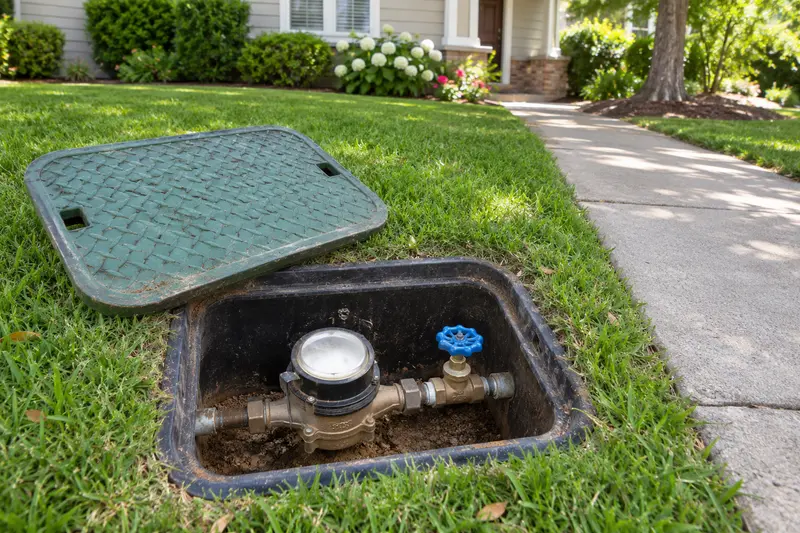
How to shut off your water in an emergency, start with the main valve
The main shutoff controls water to the whole house. It sits where the water line enters the building, before the line branches off to the fixtures.
Houses with a basement
Most Muncie homes with a basement have the main valve on the wall that faces the street, close to where the pipe comes through the foundation. It is often right next to the water meter. Follow the largest cold water pipe back to the wall.
Houses on a slab or crawl space
Without a basement, look in a utility closet, the garage, near the water heater or under the kitchen sink. In some homes it sits in the crawl space near the access door.
At the curb
Many properties also have a curb valve in a box in the front yard or by the sidewalk. It often needs a special key, and in most places it belongs to the water utility. Use the valve inside the house first.
Find it before you need it
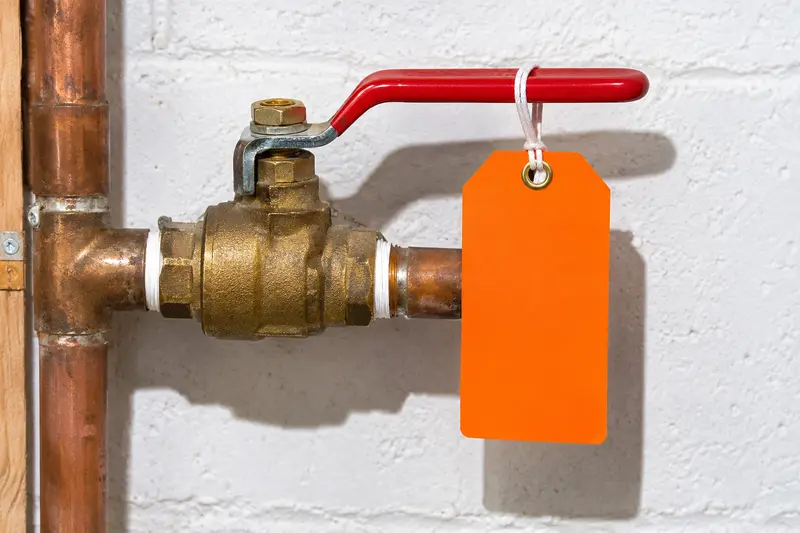
Spend five minutes today finding your main valve. Tag it, clear the boxes away from it and make sure everyone in the house knows where it is.
How to close each type of valve
There are two common kinds of main valve, and they close differently.
Main water valve types
| Valve type | What it looks like | How to close it |
|---|---|---|
| Gate valve | A round wheel handle, common in older homes | Turn clockwise until it stops. It may take several turns. |
| Ball valve | A straight lever handle | Turn a quarter turn so the lever sits across the pipe. |
| Fixture valve | A small oval or lever handle under a sink or behind a toilet | Turn clockwise until snug. Do not force it. |
| Water heater valve | A valve on the cold pipe at the top of the tank | Turn clockwise or a quarter turn to close. |
Gate valves in older Muncie homes can be stiff or seized after years without use. Turn gently and steadily. If it will not move, stop rather than forcing it, because a broken valve can turn a small leak into a large one.
Shut off water to one fixture instead
For a leak at a single sink, toilet or appliance, you may not need to turn off the whole house. Most fixtures have their own shutoff valves.
- Sinks. Two small valves inside the cabinet, one for hot and one for cold.
- Toilets. One valve on the wall behind the toilet, near the floor.
- Washing machine. Two valves on the wall behind the machine, usually with hoses attached.
- Dishwasher. A valve under the kitchen sink feeding a thin supply line.
- Refrigerator ice maker. A small valve under the sink or in the basement below the kitchen.
- Outdoor faucets. An inside valve in the basement or crawl space on the line that runs to the faucet.
If a fixture valve leaks or will not close, go straight to the main shutoff.
What to do once the water is off
- Drain the pressure. Open a faucet on the lowest floor so water left in the pipes drains out rather than through the leak.
- Look after the water heater. If the water will be off for a while, set a gas heater to pilot or vacation, or switch off an electric heater at the breaker.
- Deal with electricity. If water reached outlets or light fixtures, switch off those circuits from a dry spot.
- Dry what you can. Towels, a mop and a wet vacuum limit damage to floors and walls.
- Take photos. Pictures of the leak and the damage help the technician and your insurer.
- Call. Tell us the water is already off so we know the house is safe.
Shutting off water in winter and when you travel
In a Muncie winter, hard freezes and snow can freeze pipes in an empty house. If you leave for more than a few days in cold weather, consider closing the main valve and opening a faucet to drain the lines, while keeping the heat on high enough to protect the house.
Outdoor faucets need their own attention every fall. Close the inside valve on each line, then open the outdoor faucet to let the water out. This stops the short pipe inside the wall from freezing and splitting. The burst and frozen pipe page has more on keeping pipes safe in the cold.
For the steps that come after the water is off in any emergency, read what to do when a pipe bursts and the what to do now guide.
Test your main valve once a year
A valve that has not moved in years is the one that fails when you need it. Once a year, close the main valve fully, check that a faucet stops running, then open it again slowly. If it is stiff, leaks at the stem or does not stop the water fully, mention it next time a technician visits. Replacing a worn main valve is far easier on a calm day than during a flood.
While you are there, check the fixture valves under sinks and behind toilets the same way. A quick turn keeps them from seizing.
When the valve leaks or will not close
Old valves fail in two ways. A gate valve can seize so the wheel will not turn, or turn freely without closing because the gate inside has broken off its stem. Either way the water keeps running. A valve can also start leaking at the stem once it moves for the first time in years.
If the main valve will not close, look for a second valve on the other side of the water meter, or close the fixture valves nearest the leak. If water is spraying and nothing stops it, call right away and say the main valve has failed. A drip at the stem after closing is usually fine for a short time. Put a towel under it and mention it on the call so the valve can be replaced.
Knowing how to shut off your water in an emergency includes knowing your backup plan. Find the fixture valves now, so you have more than one way to stop a leak.
Make sure everyone at home can do it
The person who knows where the valve is may not be the person at home when a pipe bursts. Walk everyone in the house through it once, including older children and anyone who looks after the house while you are away.
- Show them the main valve and which way to turn it.
- Show them the valves under the sinks and behind the toilets.
- Tag the main valve with a bright label.
- Keep a flashlight near it.
- Write the steps for how to shut off your water in an emergency on a card and tape it near the valve.
It takes five minutes, and it is the best protection a house can have against a burst pipe.
Reading the water meter while the water is off
The water meter is a useful tool once the main valve is closed. With every fixture off, the dial or the small leak indicator on the meter should stand still. If it keeps moving after you close the main valve, the leak is between the meter and the valve, or the valve is not closing fully. Mention that on the call, because it changes where the technician looks first.
Shutting off the water, questions
Which way do I turn the main water valve to close it?
Clockwise for a round wheel handle, until it stops. For a lever handle, turn it a quarter turn so it sits across the pipe.
What if the main valve will not turn?
Do not force it with a long wrench, because an old valve can break and make the leak worse. Close the valves nearest the leak instead and call.
Do I need to turn off the water heater when I shut off the water?
If the water will be off for more than a short time, yes. Set a gas heater to pilot or vacation and switch an electric one off at the breaker.
How do I turn the water back on safely?
Open the main valve slowly, a little at a time, with a faucet open somewhere in the house to let the air out. Then check the repaired area for drips.