Plumber terms explained in plain English
Plumbers use a lot of words that most people never need until something goes wrong. Here are the plumbing terms explained in plain English, grouped by where you find them in the house. You never need to know any of them to call Plumber Muncie, but they make it easier to follow what a technician tells you.
- Licensed local technicians
- No obligation
- All of Muncie
Pipes and water supply
- Main shutoff valve
- The valve that controls water to the whole house, usually where the water line enters, often near the meter.
- Supply line
- Any pipe that brings clean, pressurized water to a fixture. Under sinks and behind toilets these are often short flexible hoses.
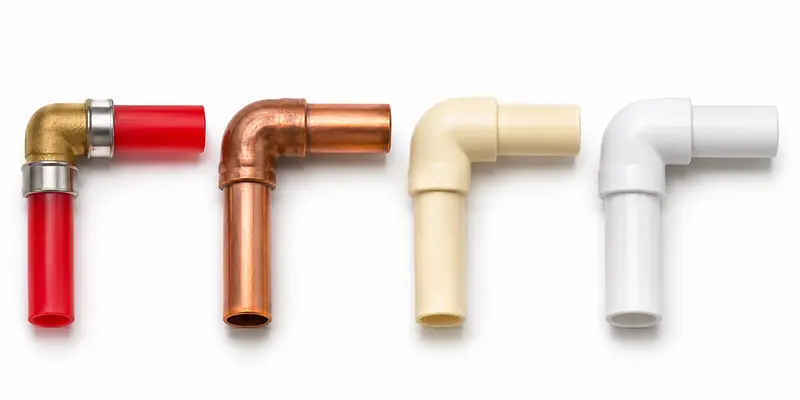
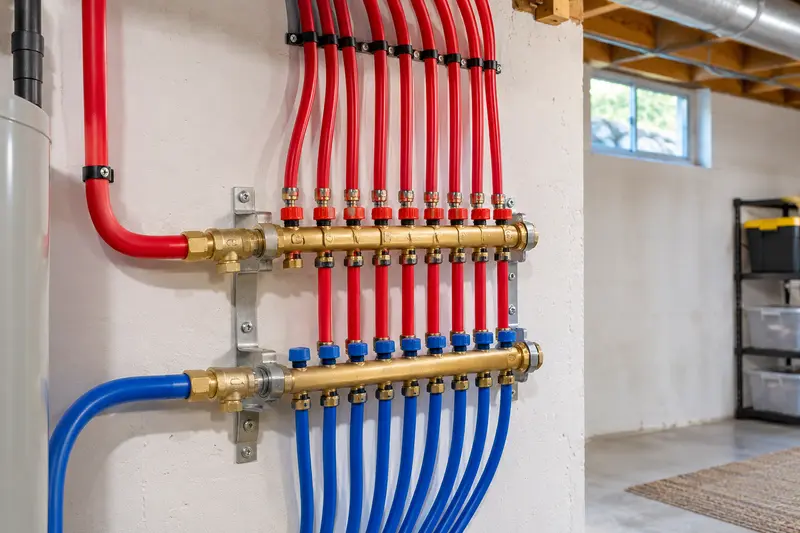
- PEX
- Flexible plastic water pipe, often red for hot and blue for cold. Common in newer homes and remodels.
- Copper
- Rigid metal water pipe used in many homes for decades. Can develop pinhole leaks with age.
- Galvanized pipe
- Steel pipe coated with zinc, found in older homes. It rusts inside over time, which lowers water pressure.
- CPVC
- A rigid plastic pipe, usually cream colored, used for hot and cold water lines.
- Pressure regulator
- A valve on the main line that keeps water pressure in the house at a safe level.
Drains and sewer
- P trap
- The curved section of pipe under a sink or tub. It holds a little water to stop sewer gas coming up the drain.
- Branch line
- A drain pipe that carries water from a group of fixtures to the main line.
- Main sewer line
- The large pipe that carries everything from the house to the city sewer.
- Cleanout
- A capped opening on a drain or sewer line that gives access for clearing clogs without taking fixtures apart.
- Vent stack
- The pipe through the roof that lets air into the drains so they flow smoothly and do not gurgle.
- PVC
- White plastic pipe used for drains and newer sewer lines.
- Cast iron
- Heavy metal drain pipe found in older homes. It lasts a long time but can rust and crack.
- Drain snake
- A flexible cable that is fed into a drain to break up or pull out a clog. Also called an auger.
- Hydro jetting
- Cleaning the inside of a drain or sewer line with a high pressure stream of water.
- Camera inspection
- A small camera on a cable pushed through a drain or sewer line to show clogs, cracks and roots.
- Backflow
- Water flowing the wrong way, for example dirty water pulled back into clean supply lines. Backflow preventers stop it.
Fixtures and appliances
- Flapper
- The rubber seal at the bottom of a toilet tank. A worn flapper makes the toilet run.
- Fill valve
- The valve in a toilet tank that refills it after a flush.
- Wax ring
- The seal between the bottom of a toilet and the drain in the floor.
- Cartridge
- The part inside many faucets that controls the flow and temperature. A worn cartridge makes a faucet drip.
- Aerator
- The small screen at the tip of a faucet spout that shapes the stream. It can clog with grit.
- Sump pump
- A pump in a pit in the basement floor that removes groundwater from around the foundation.
- Check valve
- A valve that lets water flow only one way, for example out of a sump pit but not back in.
Valves, fittings and tools
- Gate valve
- An older style of valve with a round wheel handle. It closes slowly with several turns and can seize if never used.
- Ball valve
- A valve with a lever handle that opens or closes with a quarter turn. Common on newer main lines.
- Stop valve
- Another name for the small shutoff valves under sinks and behind toilets.
- Hose bib
- An outdoor faucet. In winter the pipe behind it can freeze if a hose is left attached.
- Union
- A fitting that joins two pipes and can be taken apart without cutting, often found near water heaters.
- Coupling
- A short fitting that joins two pieces of straight pipe.
- Elbow
- A fitting that turns a pipe at an angle, usually ninety or forty five degrees.
- Pipe wrench
- A heavy adjustable wrench with toothed jaws for gripping round pipe.
- Tubing cutter
- A tool that cuts copper or plastic pipe cleanly by rotating a blade around it.
- Crimp ring
- A metal ring squeezed around a PEX fitting to make a watertight joint.
- Thread seal tape
- Thin white tape wrapped around threaded joints to help them seal.
Words you may hear about older homes
- Polybutylene pipe
- A gray plastic water pipe used in some homes decades ago. It can become brittle and crack, so it is worth asking about if you see it.
- Pipe sleeve
- A short tube around a pipe where it passes through a wall or floor, protecting it from rubbing against concrete or framing.
- Pressure tank
- A tank on homes with a private well that keeps water pressure steady between pump cycles.
- Clay sewer pipe
- Short sections of fired clay pipe used for older sewer lines. The joints are a common entry point for roots.
- Orangeburg pipe
- An old fiber pipe used for some sewer lines that can soften and collapse with age.
- Water hammer arrestor
- A small device that absorbs the shock when water stops suddenly, quieting banging pipes.
- Dielectric union
- A fitting that separates copper from steel to slow corrosion where the two metals meet.
- Floor drain
- A drain in the basement floor, the lowest drain in most houses and often the first place a sewer backup shows.
- Standpipe
- The tall open pipe the washing machine drain hose sits in.
Water heaters
- Tank water heater
- A heater that stores hot water in an insulated tank, heated by gas or electricity.
- Tankless water heater
- A compact heater that warms water as it flows, without storing it.
- Temperature and pressure relief valve
- A safety valve on the water heater that opens if the temperature or pressure gets too high.
- Anode rod
- A metal rod inside a tank water heater that corrodes in place of the tank, protecting it from rust.
- Sediment
- Minerals that settle at the bottom of a water heater tank, causing rumbling and slow heating.
- Thermocouple
- A small safety part on many gas water heaters that keeps the gas on only while the pilot is lit.
Putting plumber terms explained in plain English to use
Knowing a few of these words helps in an emergency. If you know where the main shutoff valve is, you can stop a burst pipe in seconds. If you know your cleanout, the technician can reach a sewer clog faster. And if you can tell whether a leak is on a supply line or a drain, you know whether closing the water will help.
For the steps to take in each situation, read the what to do now guide, how to shut off your water and the plumbing questions page. For each problem in detail, see all plumbing services.
Having plumber terms explained in plain English is most useful before something goes wrong. Walk around your basement or utility room with this page open and find the main shutoff, the water heater relief valve, the cleanout and the sump pump if you have one. Five minutes of looking now saves a lot of searching during an emergency.
Most Muncie homes have a mix of materials. An older house may have galvanized supply lines and cast iron drains, while a remodeled kitchen above it uses PEX and PVC. When a technician says a repair moves a section from one material to another, this page explains what that means.
Words a technician may use about your repair
When a technician explains a repair, a few phrases come up often. A temporary repair stops the water now, with a lasting fix to follow. Rerouting means running a new pipe along a different path instead of digging out the old one. Descaling means removing mineral buildup, usually from a tankless water heater. Jetting is short for hydro jetting a drain. And bringing it up to code means making a repair meet current plumbing rules, which can matter when old work is replaced.
Plumbing words, questions
Do I need to know plumbing words to call?
No. Describe what you see in your own words. The technician works out the right terms and the right repair.
What is the difference between a supply line and a drain?
A supply line brings clean water to a fixture under pressure. A drain carries used water away by gravity. Closing the main valve stops a supply leak but does not help a drain backup.
What should I do if a technician uses a word I do not know?
Ask. A good technician is glad to explain, and this page covers most of the words you are likely to hear.